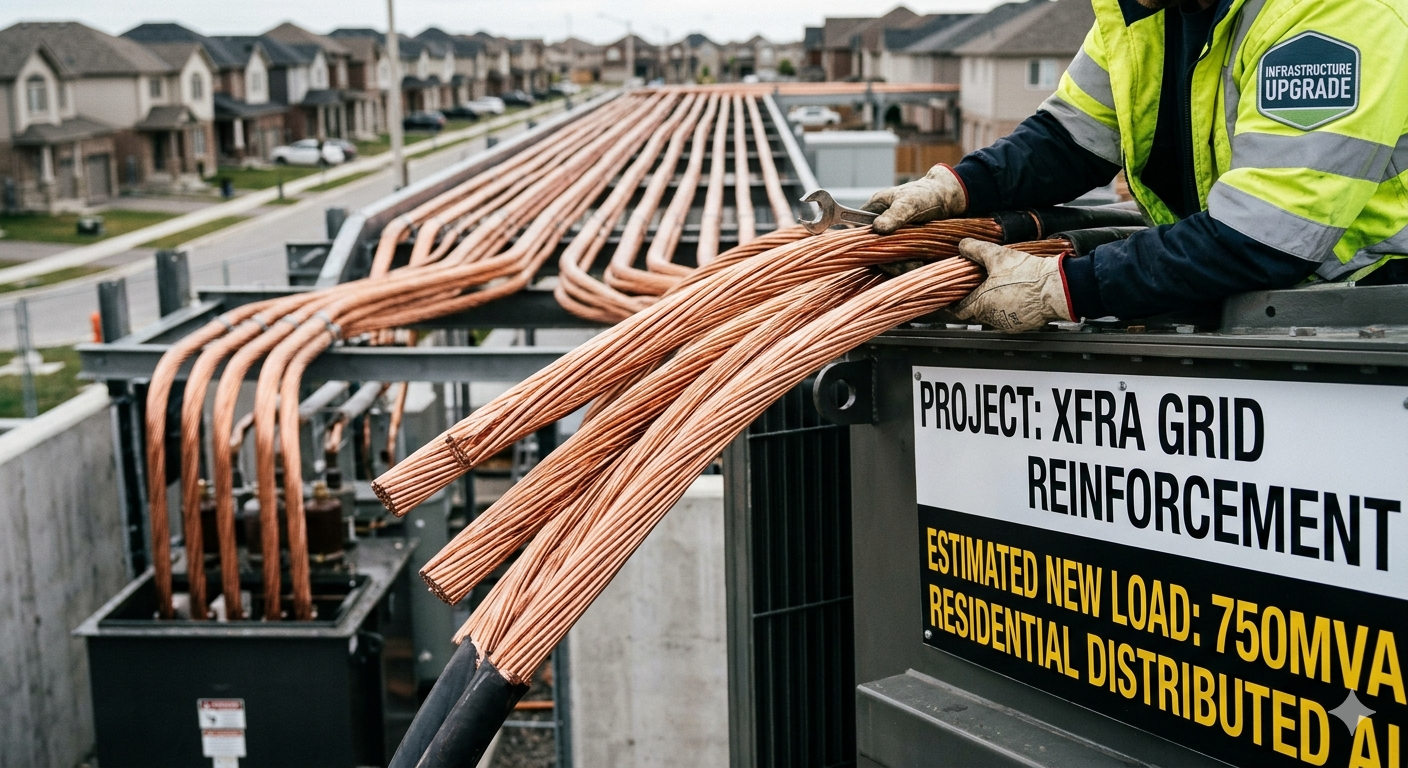
NVIDIA recently announced a groundbreaking shift in infrastructure: bringing AI data centers directly into individual homes. Through the launch of mini-nodes called XFRA—developed in partnership with homebuilder PulteGroup and smart panel manufacturer Span—the company aims to tap into unused residential electrical capacity to power the next generation of AI.
While the tech world focuses on the software, the commodities market is overlooking a massive physical consequence: the unprecedented demand for copper.
The New Floor for Copper Demand
Until now, the "copper story" was driven primarily by hyperscale data centers. Financial giant JPMorgan Chase recently projected that these massive facilities would require 475,000 tons of copper by 2026. Many analysts believed this "spike" was already priced into the market.
However, the shift toward distributed, residential AI suggests that 475,000 tons isn't the peak—it’s the floor.
The Scale of the Residential Challenge
There are approximately 145 million homes in the United States. Even a modest 10% adoption rate would result in 14.5 million homes hosting these AI nodes. Each unit pulls between 5 to 15 kW of new, sustained electrical load.
The American residential grid, largely built in the 1970s to power basic appliances like refrigerators and air conditioners, is not equipped for this evolution. To support this "distributed" AI model, the infrastructure must be completely overhauled:
Neighborhood Transformers: Must be replaced to handle higher loads.
Feeder Lines: Require thicker gauge wiring.
Substations: Need massive capacity upgrades.
Service Entrances: Every participating home will require updated wiring.
Why This Matters
Hyperscale data centers are concentrated in specific geographic hubs. They can be delayed, moved, or optimized. In contrast, distributed AI is "everywhere." When companies like PulteGroup bake these systems into the build standards of new American homes, the demand becomes permanent and immediate.
Both the massive data centers and the millions of smart homes will be competing for the same limited supply of metal at the exact same time.
The Bottom Line: You cannot run AI on light, and you cannot run a power grid on hope. Both require copper. The demand for this essential metal has just doubled in scale, yet the market has barely noticed.



Hello from Bonusbacklinks, Upgrade campusconnectx.com SEO performance, expand your search appearance and grow powerful backlinks! BonusBacklinks.com - we provide daily backlinks and bring organic traffic to your site every day: Use 85% Sale Trusted daily seo backlinks Organic website visits Price cheap as $1 Bonus discount codes https://BonusBacklinks.com/85coupon Regards, Levi from Bonusbacklinks