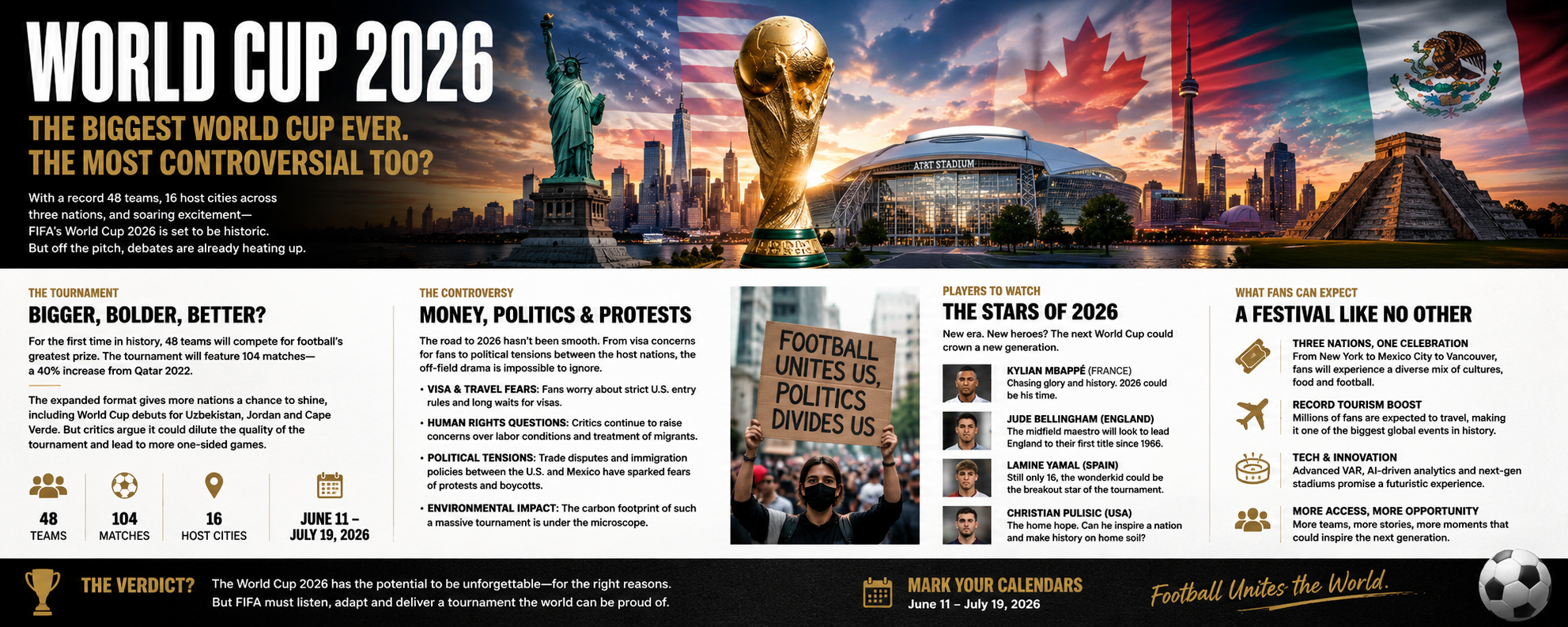
The FIFA World Cup 2026 is already shaping up to be unlike anything football has seen before. Hosted across three powerhouse nations—the United States, Canada, and Mexico—this edition is dramatically expanding the game’s global footprint.
However, with grand expansion comes grand debate. From skyrocketing commercial interests to complex geopolitical logistics, the 2026 tournament is stirring up serious conversations about money, politics, and the ultimate future of international football.
48 Teams and More Chaos: The New World Cup Format Explained
For the first time in football history, the World Cup will feature 48 teams instead of the traditional 32. This massive expansion means more matches, more debutant nations, and unprecedented potential for historic underdog stories. But not everyone is celebrating the change.
The Pros and Cons of a 48-Team World Cup
While the expansion opens doors for global representation, critics and purists have raised several red flags:
Diluted Competition: Fans worry that expanding the roster might lead to uneven group-stage matchups and uninspiring "dead rubber" games.
Player Burnout: An increased match schedule puts immense physical pressure on players who are already exhausted from grueling club seasons.
The Underdog Advantage: On the flip side, supporters argue this is a long-overdue opportunity for smaller football nations in Africa, Asia, and North America to finally shine on the world’s biggest stage.
The Commercial Explosion: Money, Corporate Power, and Ticket Prices
The 2026 World Cup isn't just a sporting event—it is projected to be the most financially lucrative sporting event in human history. Corporate sponsorships, broadcasting rights, and local tourism revenue are expected to shatter previous records.
The Cost of the Game
Many analysts are labeling the 2026 edition as "over-commercialized." Ticket pricing is already a highly contentious topic among die-hard supporters, sparking fears that traditional football culture is being priced out in favor of corporate hospitality and elite interests.
Cross-Border Logistics and Political Tensions Behind the Tournament
Hosting a mega-event across three massive, sovereign nations presents an administrative minefield. Because the tournament spans the US, Canada, and Mexico, logistics and immigration policies have become central talking points.
Navigating the Tri-National Border
Fans traveling to support their countries may face complex visa requirements and rigorous border crossings. Human rights and advocacy groups have already raised concerns about potential travel inequality, noting that supporters from certain regions may face far stricter scrutiny than others. It begs the ultimate question: Can a global sporting event truly remain politically neutral today?
Next-Gen Football: Players to Watch in the 2026 World Cup
By the time the tournament kicks off, the international football landscape will have officially transitioned into a brand-new era. The legendary guards are stepping back, making way for a new generation of superstars expected to be at the absolute peak of their powers:
Kylian Mbappé (France): Ready to cement his legacy as one of the greatest World Cup performers of all time.
Jude Bellingham (England): The midfield maestro expected to carry the tactical hopes of a nation.
Lamine Yamal (Spain): The generational wonderkid poised to take the global stage by storm.
Beyond the household names, the real magic of a 48-team tournament lies in the unknown. Breakthrough talents from emerging football regions are bound to redefine the sport's global hierarchy.
Tech, Fan Zones, and the "Festival World Cup" Experience
FIFA is marketing 2026 not just as a tournament, but as a boundary-pushing global cultural festival. Host cities are preparing for a massive influx of travelers by turning stadiums into tech-driven entertainment hubs.
Advanced Stadium Tech: Expect highly sophisticated AI-powered stadium logistics and the next evolution of VAR (Video Assistant Referee) upgrades.
Mega Fan Zones: Cities are planning unprecedentedly large fan festivals to accommodate millions of ticketless supporters looking for the community experience.
A Global Entertainment Ecosystem: From music crossovers to digital fan experiences, this tournament is blending sports, tech, and pop culture like never before.
Final Verdict: A Celebration of Football or Corporate Overload?
When the final whistle blows, the 2026 World Cup will likely be remembered for one of two things:
The greatest, most inclusive expansion of global football in history.
A tipping point where the beautiful game became too big, too commercial, and too complicated for its own good.
Either way, one thing is certain: the world will be watching.


No comments yet. Be the first to share your thoughts!